
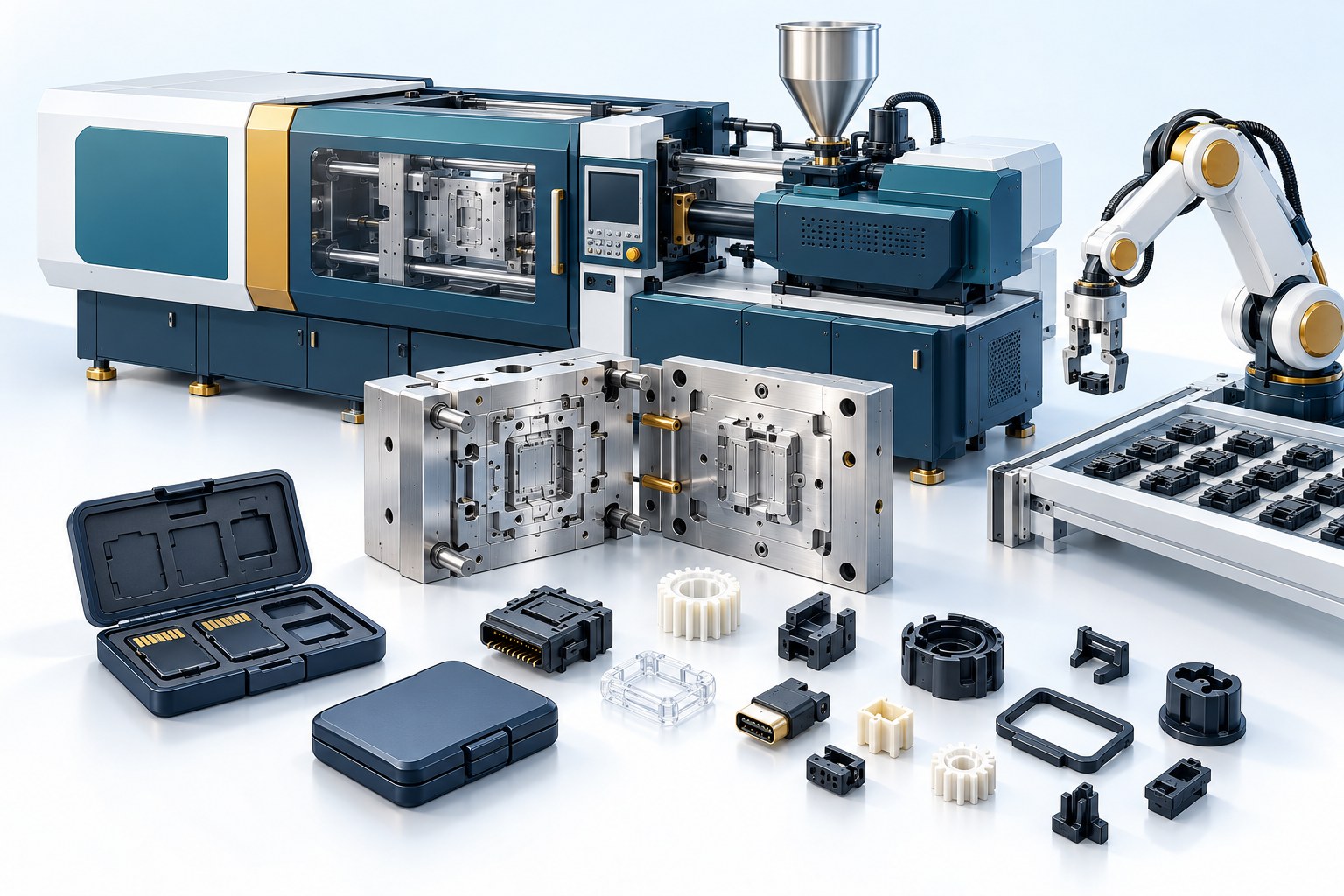
Thin-wall and miniature plastic parts can be prone to short shots, warpage, and dimensional variation. Learn how moldflow analysis and high-speed molding help address these risks.
Challenges in Thin-Wall and Miniature Molding
Consumer electronics, advanced wearables, and professional connectors continue to become smaller and lighter. Their plastic components require thin walls and miniature features without sacrificing dimensional stability. Thin-wall injection molding can involve high flow resistance, short shots, warpage, and visible weld lines.
Moldflow Analysis Helps Identify Risks Early
At the beginning of a thin-wall project, our engineering team focuses on moldflow analysis and precision mold design. Simulation helps evaluate how plastic flows and how pressure is distributed as it enters small cavities at high speed. Engineers can then assess gate placement, venting, and cooling efficiency to reduce the risk of trapped air and warpage during design-for-manufacturability (DFM) review.
High-Speed Equipment Supports Cavity Filling
The key is to fill the cavity before the material solidifies. If injection speed is insufficient, plastic may cool too early as it flows through a thin section. Jie Li Plastics therefore uses a 100-ton Japanese high-speed injection molding machine designed for thin-wall parts. Rapid injection and responsive pressure control, combined with rigid precision steel molds, help us address demanding thin-wall geometries.
Applications and Repeatable Production
This combination of early engineering analysis and high-speed molding supports applications such as memory card cases, consumer-electronics enclosures, and connector components. We continue refining our tooling and molding processes to help customers bring miniature products into stable production.
- Moldflow analysis and precision tooling
- 100-ton high-speed thin-wall equipment
- Applications in memory card cases and connectors